
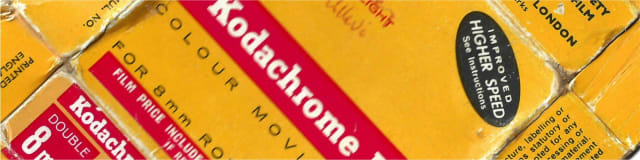
The Family Tartan
Spoiler: Probably not a Highlander.

Like many Scottish families, my first kilt was given to me aged seven, a hand-me-down that had been worn by other family members before me. MacDonald of Clanranald tartan. Like the classic MacDonald, but with an extra thin white stripe.
I wore it to formal occasions through school and university. It’s how Lucy first noticed me. She came up to me at the Rowing Club ball, started a flirty conversation about the kilt, and we danced.
I wore Clanranald because I was a Murdoch, and Murdochs, I’d been told, were a sept of Clan Donald. The MacDonalds of Clanranald came from the western Highlands and the Hebrides. Highlanders. Hard people who survived on oats, rain, and grievance. The tartan said I was one of them.
In August 2013 we visited the Isle of Skye, and stopped at Armadale Castle, the home of Clan Donald. At the visitor centre I started a deeper search. I met with the clan archivist. My question was practical: which part of the MacDonalds did I come from? The clan map showed Clan Donald territories scattered down the west coast of Scotland: Islay and Kintyre to the south; Skye and the Uists, Moidart and the western Highlands to the north. This meant my ancestors had a truly smorgasbord-like selection of regional wars to choose from. Murdoch could have come from any of them.
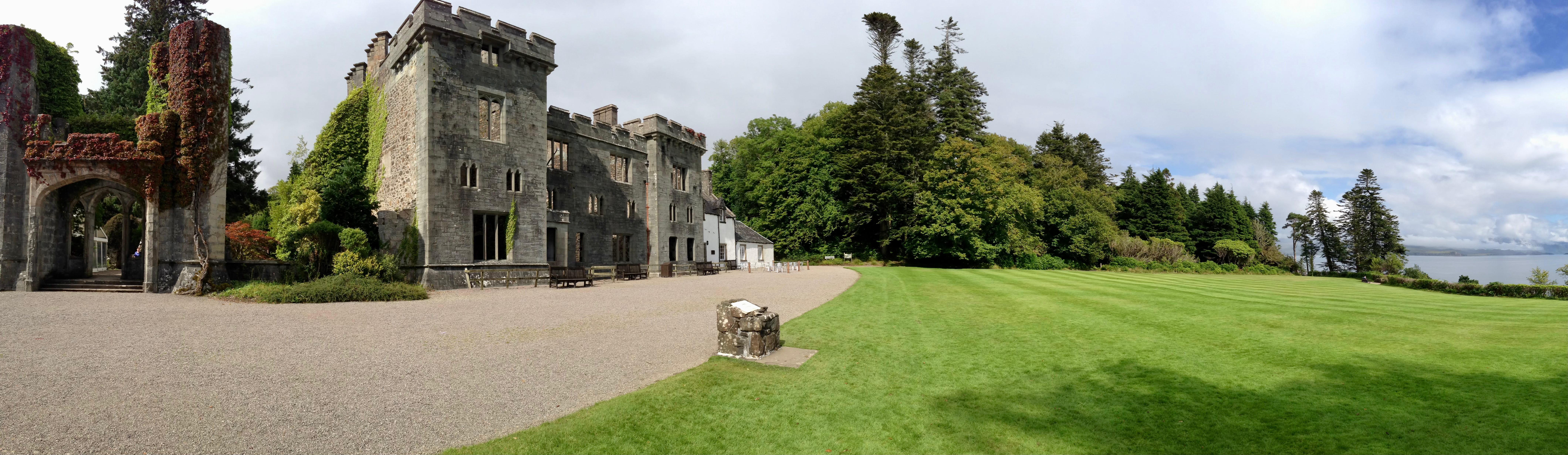
Home of Clan Donald, Armadale Castle & Gardens, Isle of Skye, August 2013
Her answer was the tartan. Whatever your family handed down, she said, was likely a good indication. Wearing a tartan different from your clan was a modern thing, the last fifty years or so. My hand-me-downs were older than that.
MacDonald of Clanranald. Western Highlands and Hebrides. Confirmed.
I liked the idea of being a Highlander. I felt a visceral connection to the landscapes of the Isle of Skye and Glen Coe. Since emigrating to the US in the early 2000s, that had only grown.
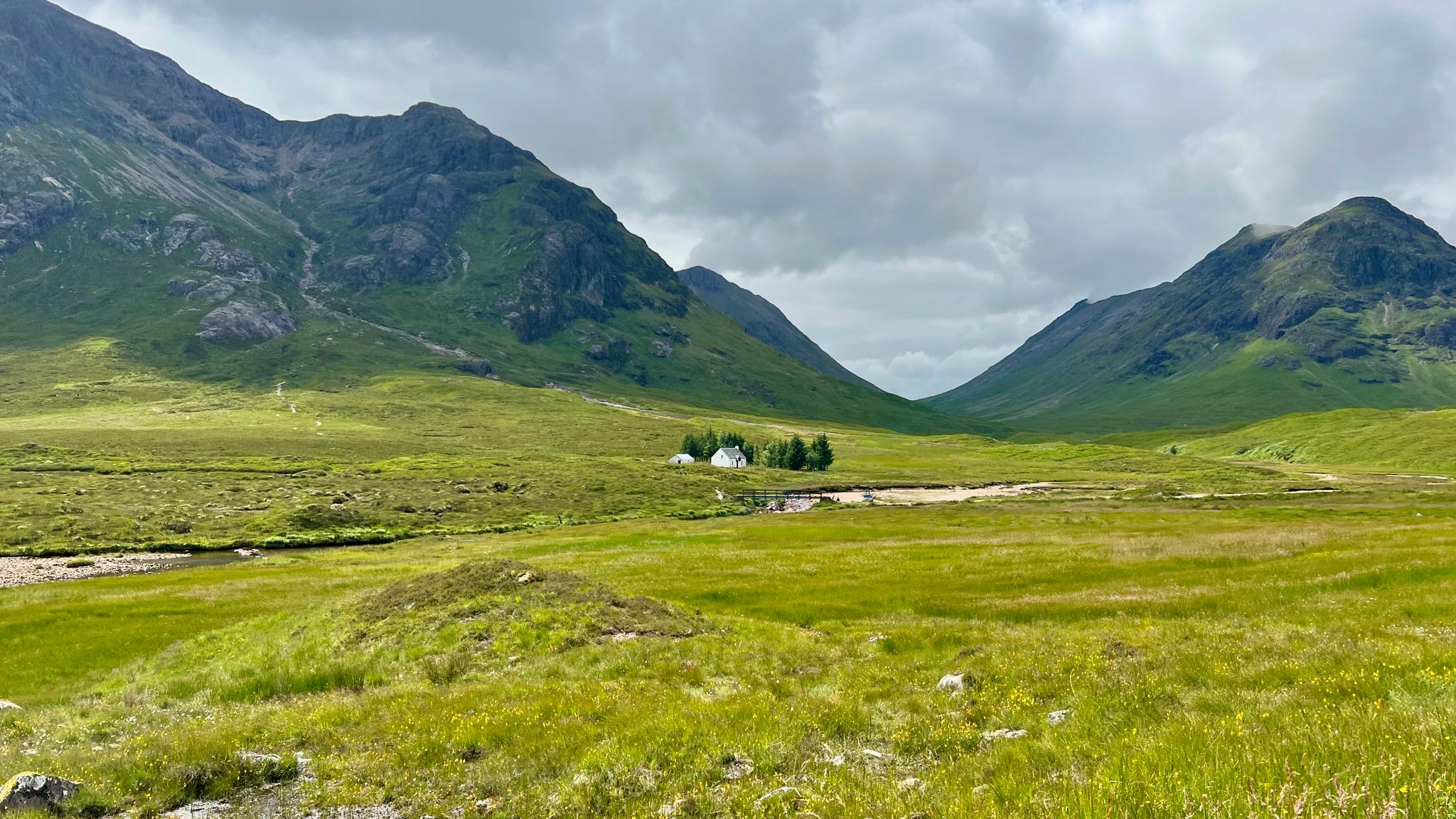
Glen Coe, July 2022.
I came away with the source material too: photographs of Black’s ‘Surnames of Scotland’, of the Clan Donald sept guide, of the clan map. They’d matter later.
During COVID I built out a first pass of the family tree, sketching the lines, filling in names and dates. A lot of it leaned on existing trees, which notoriously overreach. Everyone finds a famous ancestor, like Cousin John. In 2025 I revisited it, this time forcing a ground-truth view: every claim tied to an original document, the digital scans from the Scottish and English government archives.
I worked back through my direct Murdoch paternal line first. Each generation had to have an original document: birth, marriage, or death. The line ran back through the Clyde at Old Kilpatrick, through Lanarkshire and the industrial belt around Glasgow, and then, before that, into Ayrshire. Kilmarnock. Ayr. Ochiltree. Irvine. Five generations in a row, the early 1700s back into the early 1600s, all of them in Ayrshire. The trail goes cold around 1618, with a Johne Murdoch whose birthplace isn’t recorded. Records become sporadic or absent before then.
Ayrshire is not the Highlands. Ayrshire is Burns country. The Lowlands.
I grew up near Loch Lomond, at the start of the Scottish Highlands. My Murdoch ancestors did not.
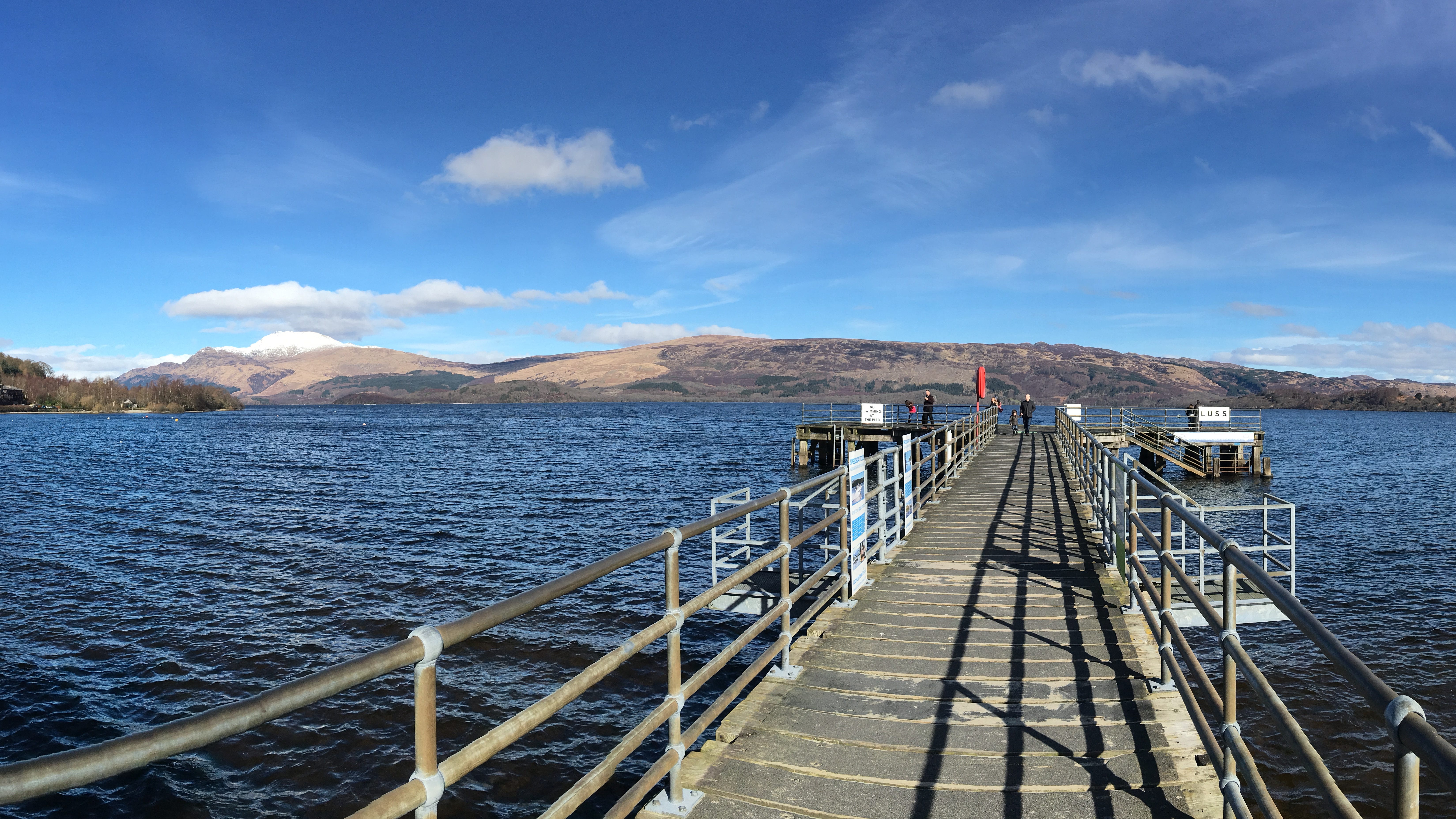
Luss Pier, with a snow-capped Ben Lomond in the background, Loch Lomond, March 2016.
Reading the records is its own challenge. The handwriting is cramped, spellings pre-standardised, abbreviations baked into Scots legal usage that a modern eye doesn’t catch. I worked through the hardest of them with ChatGPT.
One word kept appearing: “umql”, sometimes “umqle” or “wmqll”. It was the abbreviation for “umquhile”, a Scots word meaning “the late”, “deceased”. Standard shorthand in seventeenth-century marriage, baptism and testament records, and entirely opaque to a reader who didn’t know it. The AI knew it.
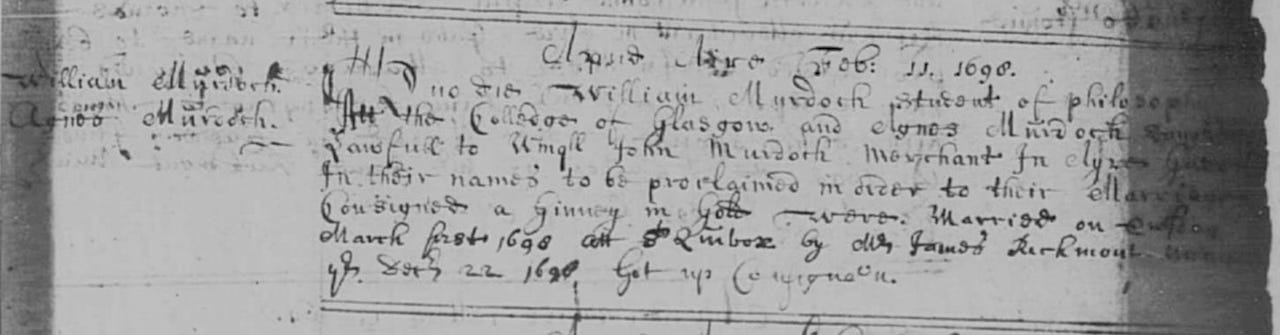
Marriage of William Murdoch and Agnes Murdoch, Ayr, 11 February 1698. Old Parish Registers, Marriages 578, p. 51. ScotlandsPeople.
“Apud Ayr, Feb: 11. 1698. Quo die William Murdoch student of philosophy at the College of Glasgow and Agnes Murdoch lawfull daughter to umqll John Murdoch Merchant in Clyde [had] their names to be proclaimed in order to their Marriage. Consigned a Ginney money. Were Married on March first 1698 at Dumbarton by Mr James Dickmore.”
This is William Murdoch’s marriage. Born in Ayr in 1678, three generations of Murdochs surround the font at his baptism, his father was a maltman in the town. By 1698 he was a student of philosophy at the College of Glasgow, marrying Agnes Murdoch, the lawful daughter of the late John Murdoch (a different Murdoch family), merchant on the Clyde. They put down a guinea as security against the banns, married three weeks later at Dumbarton, and in September retrieved the deposit.
A philosophy student. A merchant’s daughter. A maltman. These were the Murdochs in 1698. Highly civilised, gainfully employed, and completely devoid of Claymores. Lowlanders.
What I learned only later, reading Arthur Herman’s ‘How the Scots Invented the Modern World’, is that the named clan tartans are themselves a modern invention. The system was orchestrated by Sir Walter Scott for the King’s Jaunt of 1822 — George IV’s visit to Edinburgh, the first by a reigning monarch in nearly two centuries. Scott stage-managed the pageantry: chiefs in tartan, bagpipes, the whole Highland tableau. Most of the named clan tartans worn for that visit were invented for it.
The archivist’s logic at Armadale (your tartan tells you your clan) rested on a system barely two centuries old.
My kilt was a hand-me-down. My father wore it before me. So did his. What the Ayrshire records show is that the Murdochs of Kilmarnock and Ayr in the 1600s would not have worn Clanranald. They probably wore no tartan at all.
What the records don’t show is what came before 1618, where the trail goes cold. The surname itself has Gaelic roots: Murdoch from Muireach or Murchadh, meaning roughly “sea warrior” or “great chief”. On the standard sept rolls, Murdoch is listed under Clan Donald, and sometimes under others. That association is real at some depth, but it operates below where the records reach. Perhaps an ancestor finally grew weary of the weekly calendar of mutual clan slaughter, realising that surviving past thirty on an Ayrshire croft beat dying face-down in a bog for Clan Donald’s honour. The deep origin is genuinely unknown.
The precision was always the reach in any case. Clan Donald spans Sleat, Glengarry, Keppoch, the Lords of the Isles, and Clanranald, among others. The archivist’s reasoning at Armadale ran two layers: that a hand-me-down tartan tells you your clan, and then which branch. Both layers rest on Scott’s invention. Even granting the first, the second is a guess.
But somewhere in the nineteenth century (after Scott’s pageant, in the Victorian Highland revival) a Murdoch chose this cloth. Another wore it next. Then another. Then me, aged seven. Then, one evening at a Rowing Club ball, Lucy noticed it.
The tartan is a modern invention. So was the claim it was meant to carry. But the wearing of it (generation after generation of Murdochs reaching into the same fabric) is its own tradition. Not the clan’s. The family’s.
Highlander or not, the tartan stays.
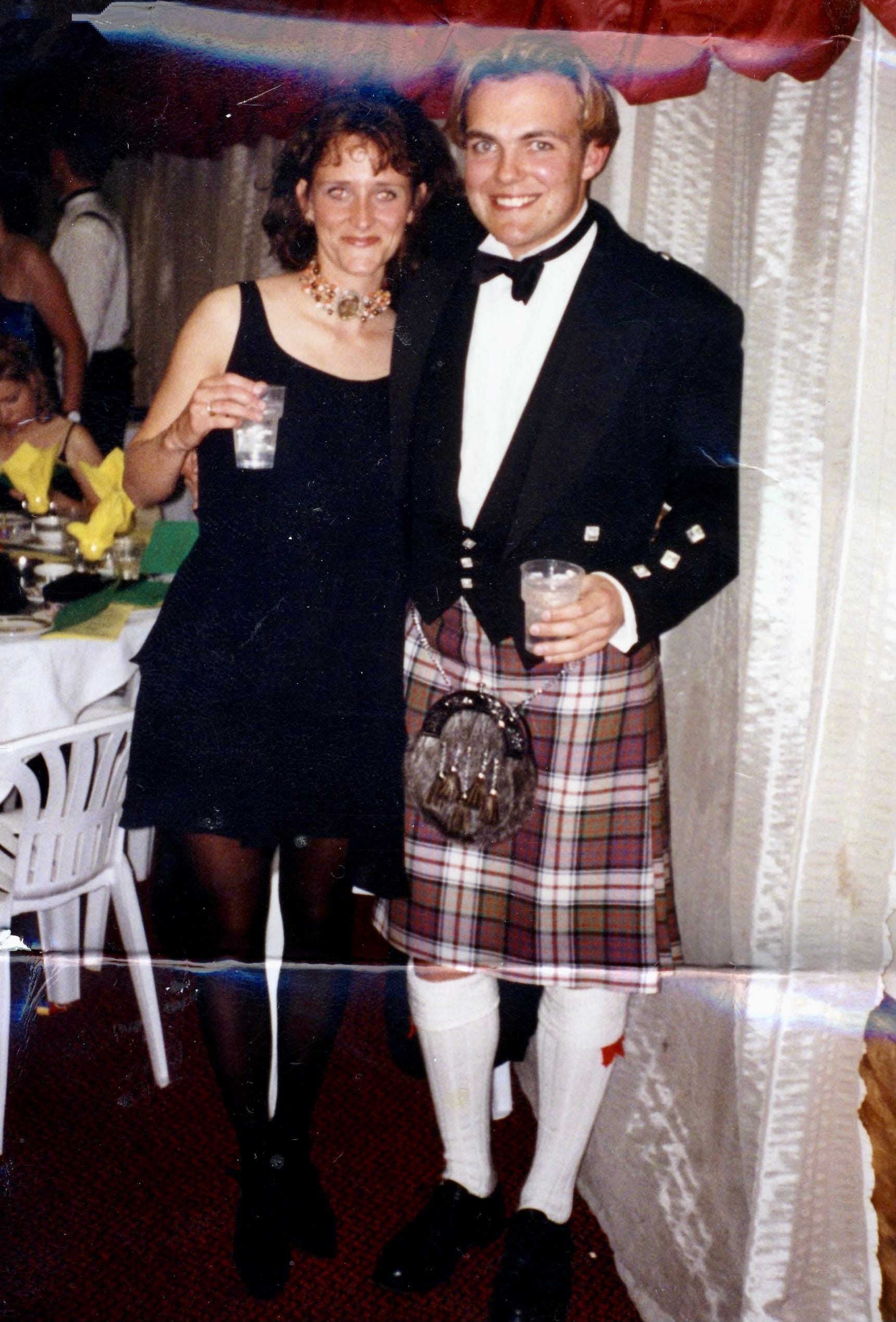
Postscript: I would be remiss, with this Substack’s focus on ground truth, to not point out a persnickety detail in the above photo. The tartan that younger me is wearing is actually the ‘Dress’ version of the main MacDonald tartan. There is no ‘Dress’ version of the MacDonald of Clanranald sett. This is the kilt my Murdoch grandparents had made for me aged 16, and I preferred this sett.
Interesting!
Currently working on my family tree as well and didn’t have to go too far back to unearth some pretty major divergence between the family myth and reality